A Brooklyn-based engineering student passionate about designing impactful solutions and learning through hands-on projects. My work spans from,
building solar lamps lighting classrooms in rural Bangladesh
to competition robots in New York City.
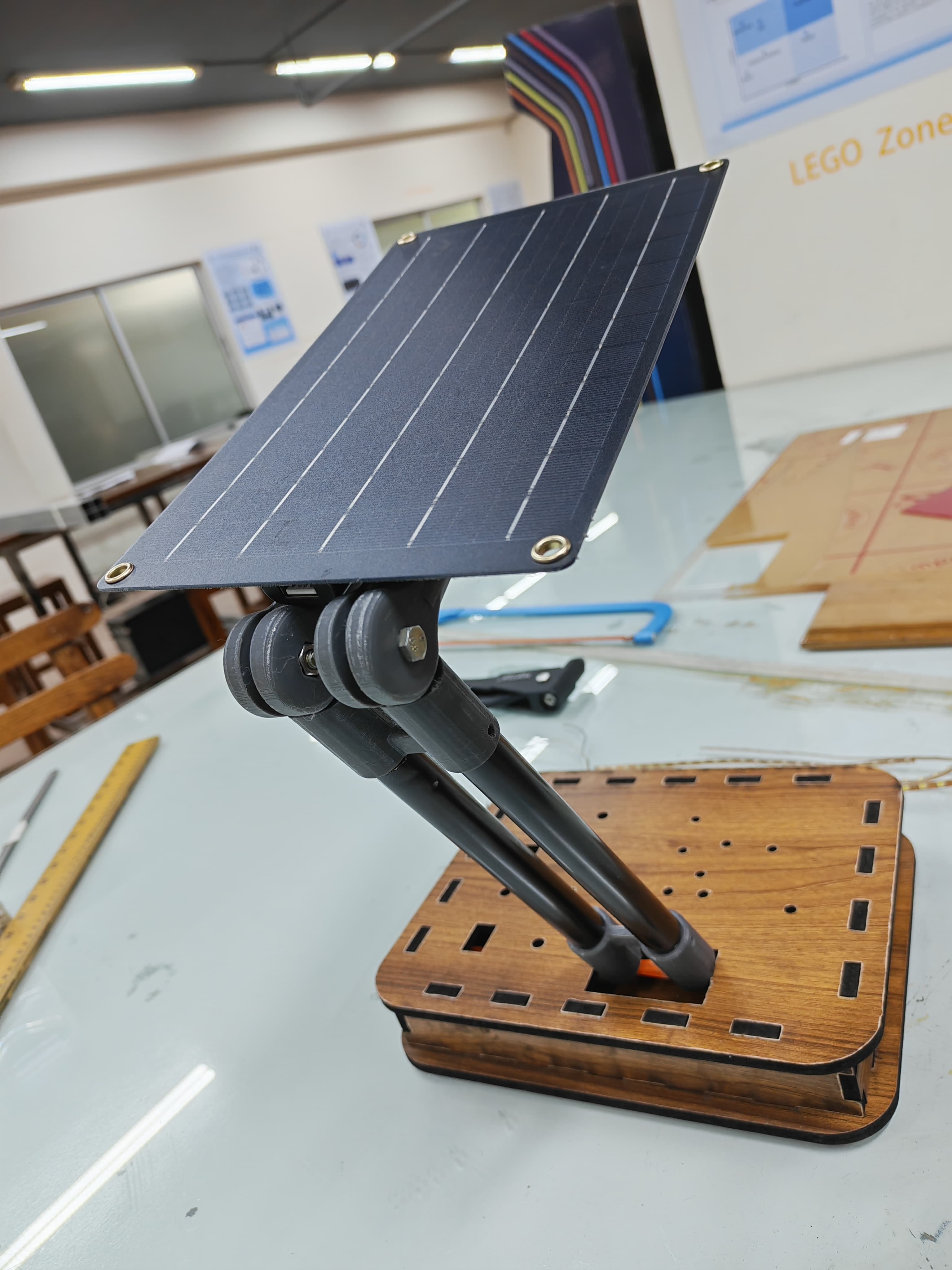
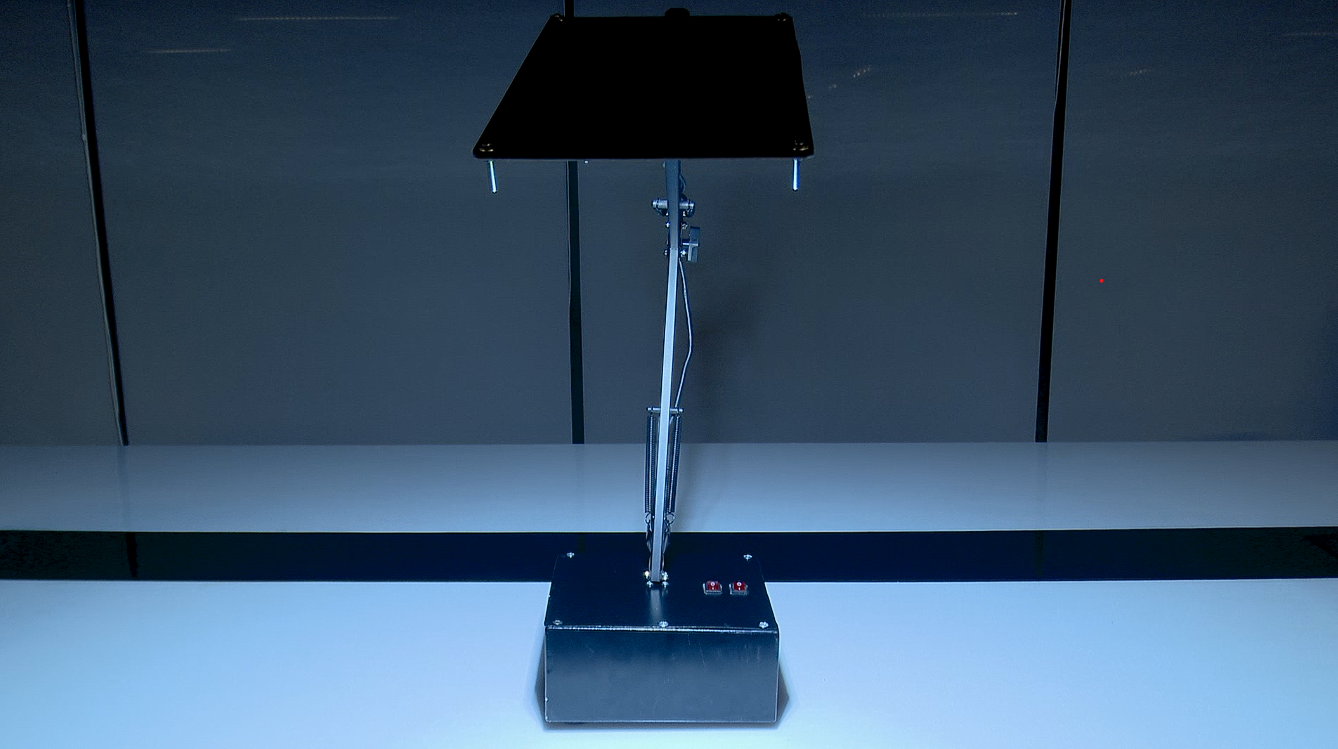
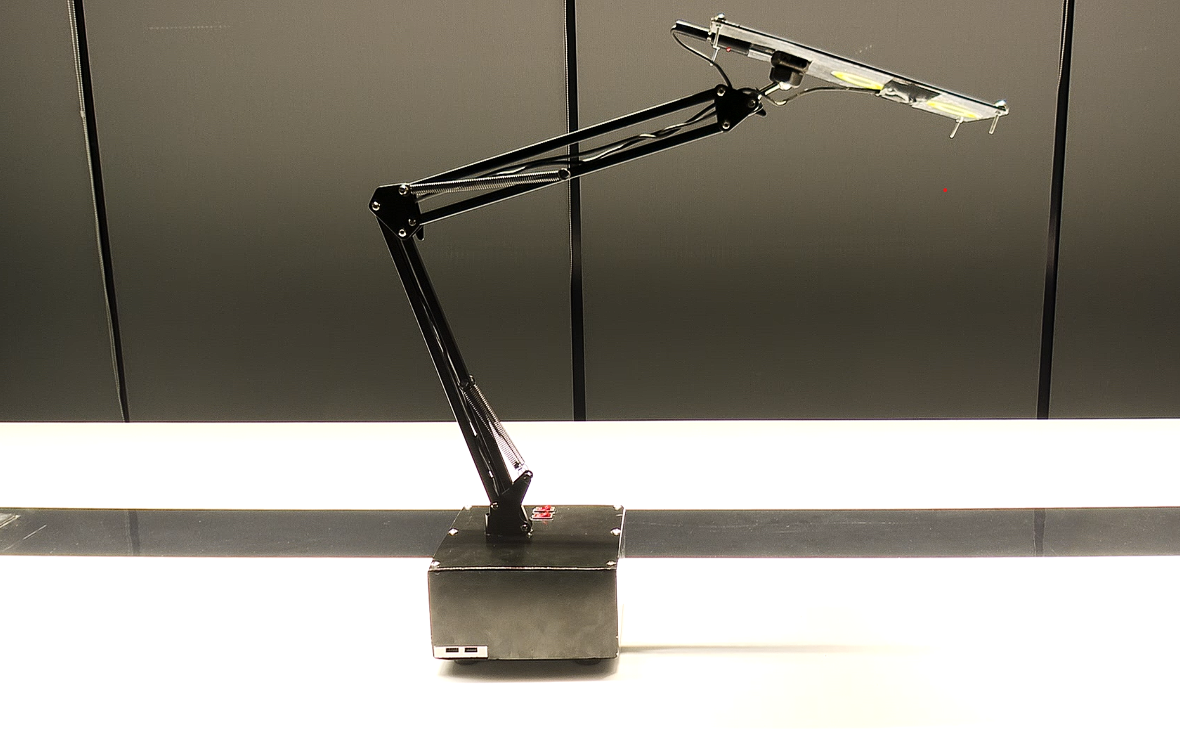
Education is an extremely important component of personal and community development, but unfortunately, rural areas are often limited by unreliable power. To help address this challenge, I developed a solar-powered reading light and USB charger to provide students with a dependable source of illumination for studying after dark.
Project Overview
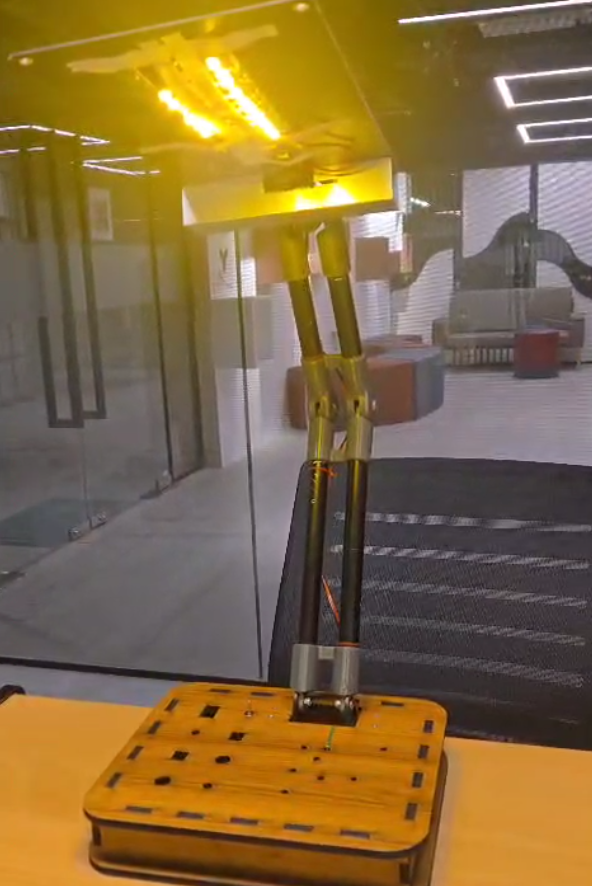
A solar panel (8 W or 12 W) charges a Li-ion battery pack inside a rectangular base. Power is managed by a USB controller, then boosted/regulated to drive high-output LEDs and provide 5 V USB charging on two ports. Two push buttons control the lamp heads. An articulated, spring-loaded arm lets you aim the beam precisely over a desk.
Base & Layout
Rectangular base, plain-sheet construction (black)
Dimensions: 8″ (W) × 7″ (L) × 4″ (H)
Centered adjustable light stand
Power & Battery
Li-ion pack: 4 × 3.7 V cells (≈ 8000 mAh total)
USB power/charge controller inside base
Two 5 V USB output ports for phones/power banks
Solar & Performance
Panels: 8 W or 12 W compatible
12 W panel: 9.5″ × 12.5″, ~5.2 V, up to 1.8 A
Charge time ≈ 2 h in direct sun (typ.)
Run time (8 W panel): ~3 h (one LED) / ~1.5 h (two LEDs)
Lighting & Controls
Two high-power LEDs (10 W each)
Two on/off push buttons on the top face
Articulated spring-loaded desk arm for aiming
Design Process
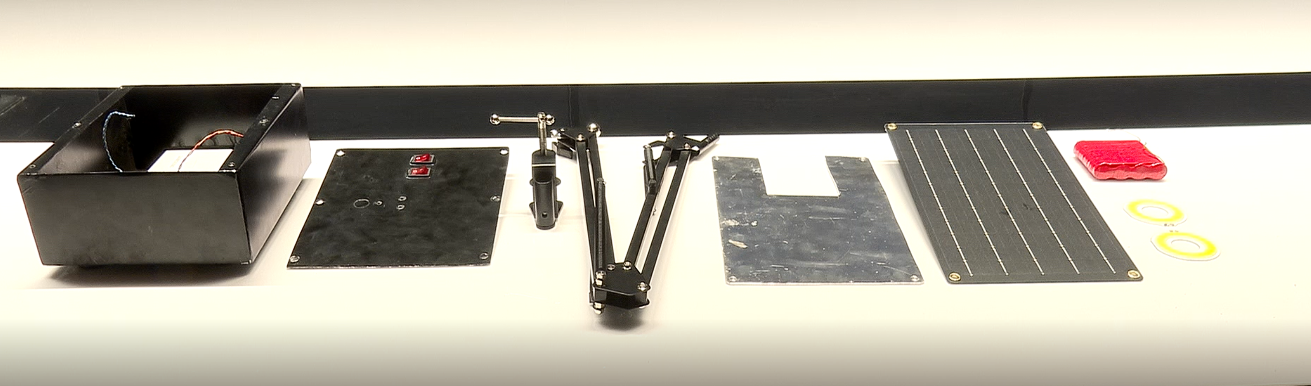
Final Parts spread: 4× Li-ion cells, USB charge/power controller, wiring harness, two LEDs, articulated arm, enclosure hardware, solar panel and leads.
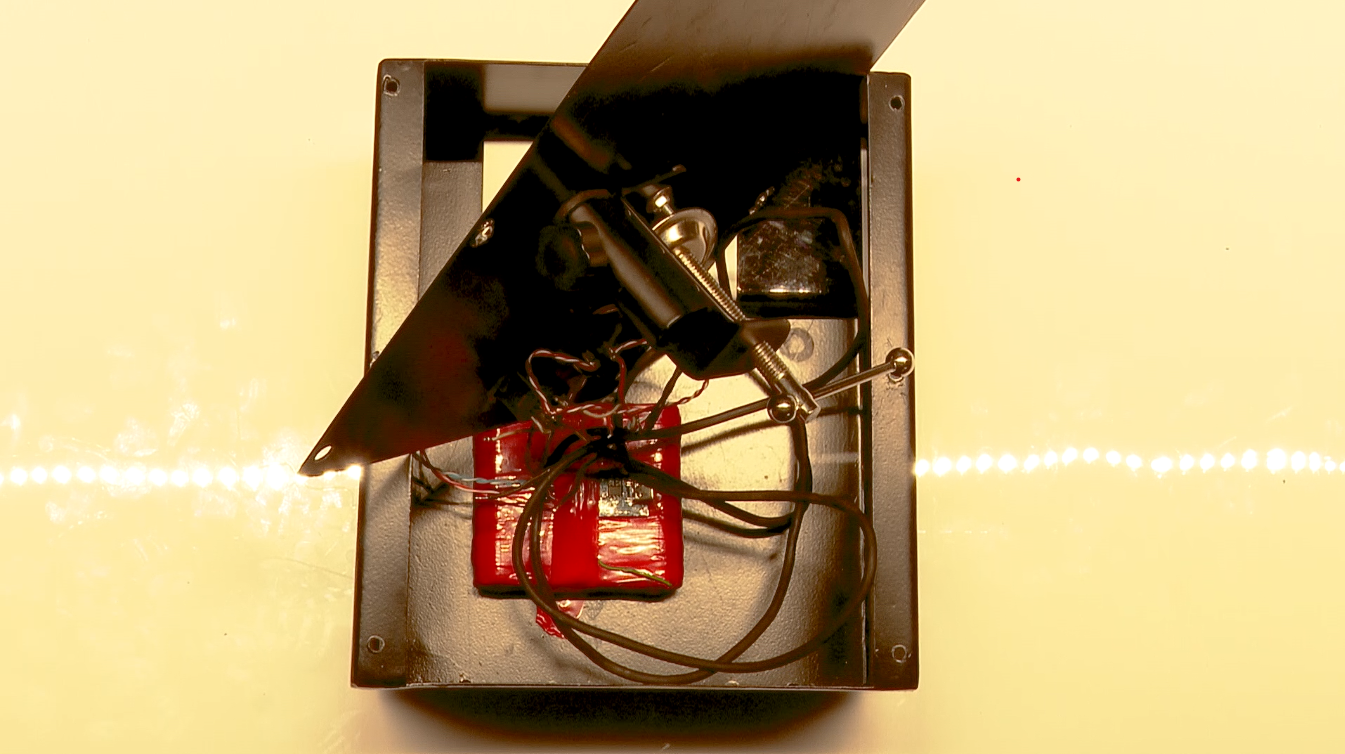
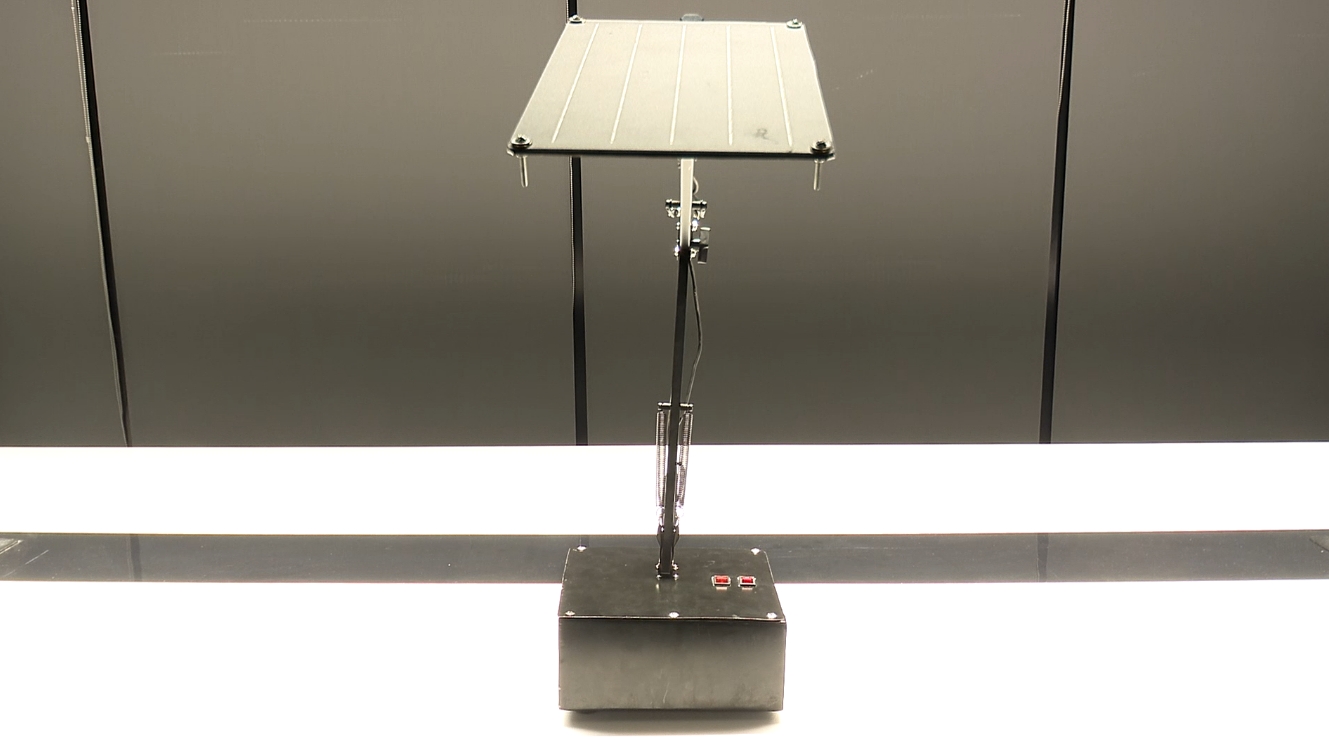
Final Internal layout with pack, controller, dual USB ports, and serviceable wiring.Final Front view: articulated arm and dual lamp heads with diffuser.Final Side view: two push-button switches on top and ventilation along the base.Final Powered on — stable, even illumination for reading.
Impact
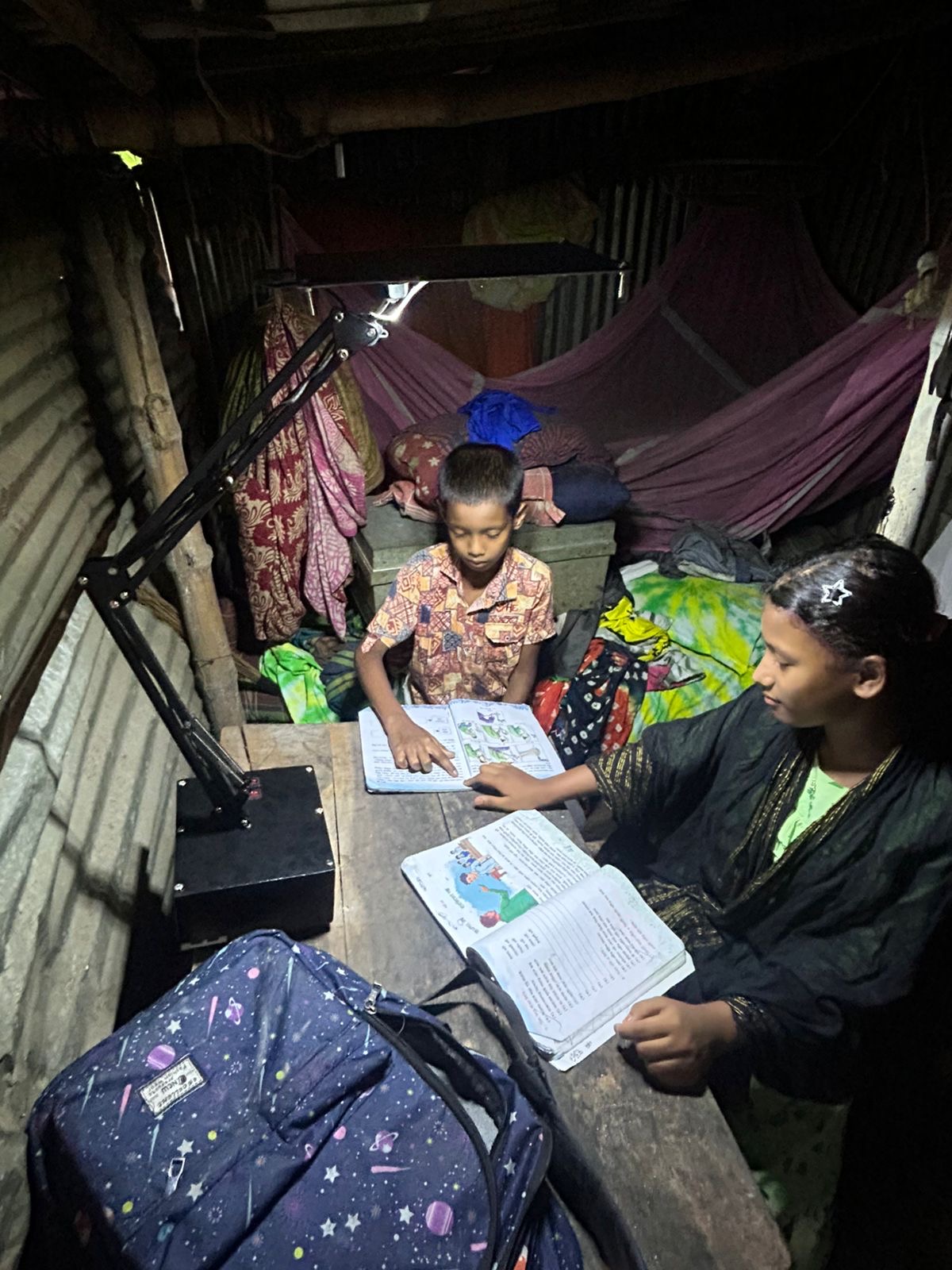
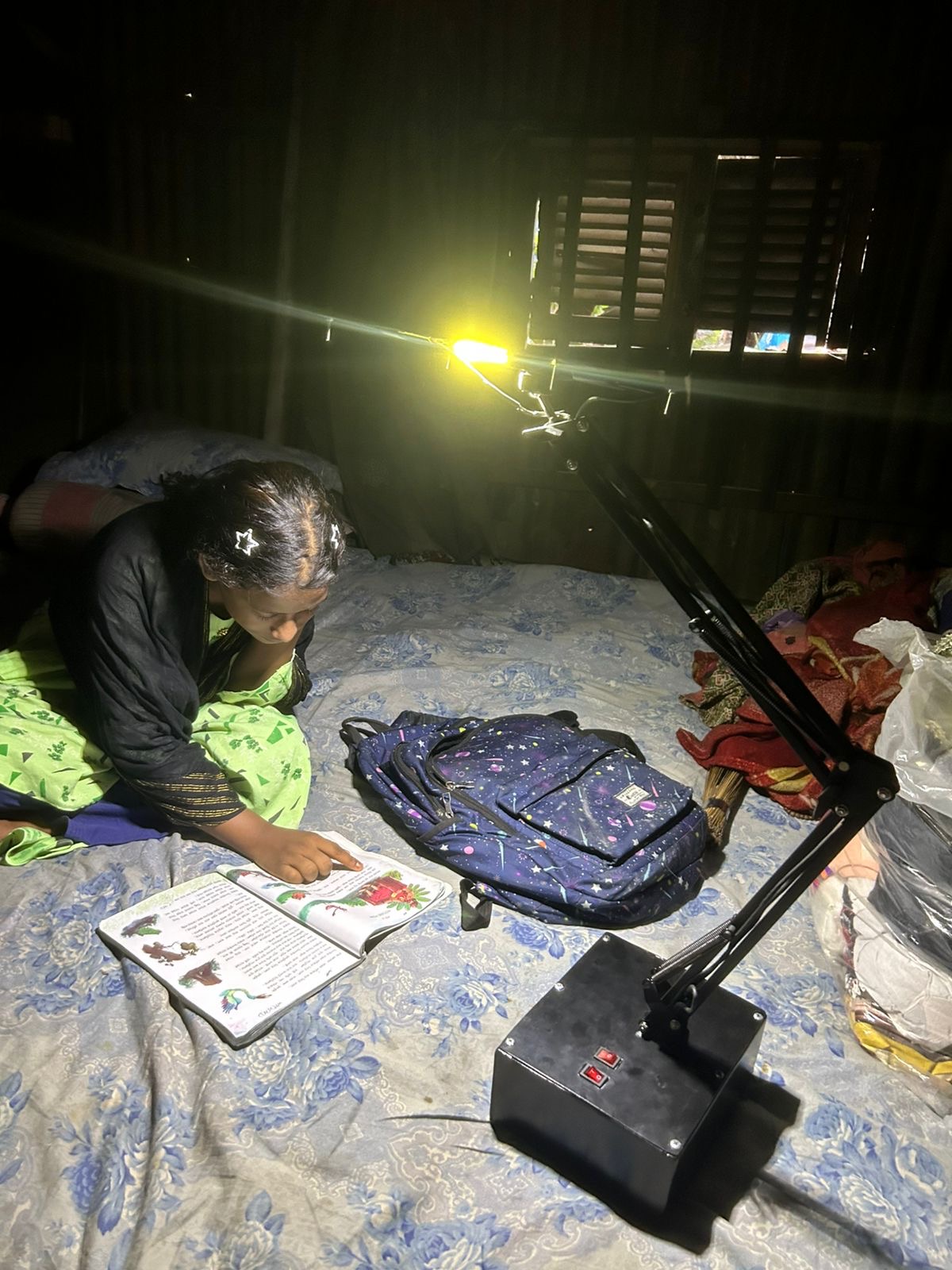
Shanaj (11) and Topon (9) studying togetherShanaj reading in bed with focused, glare-free light
With two hours in the sun, the solar lamp offers 3 hours with a single LED on and 1.5 hours when both LED lights are activated. Currently distributed to two siblings, and in the works of finding investors to manufacture more lamps for rural schools in Valuka, Bangladesh.
Solar Lamp Project Continued
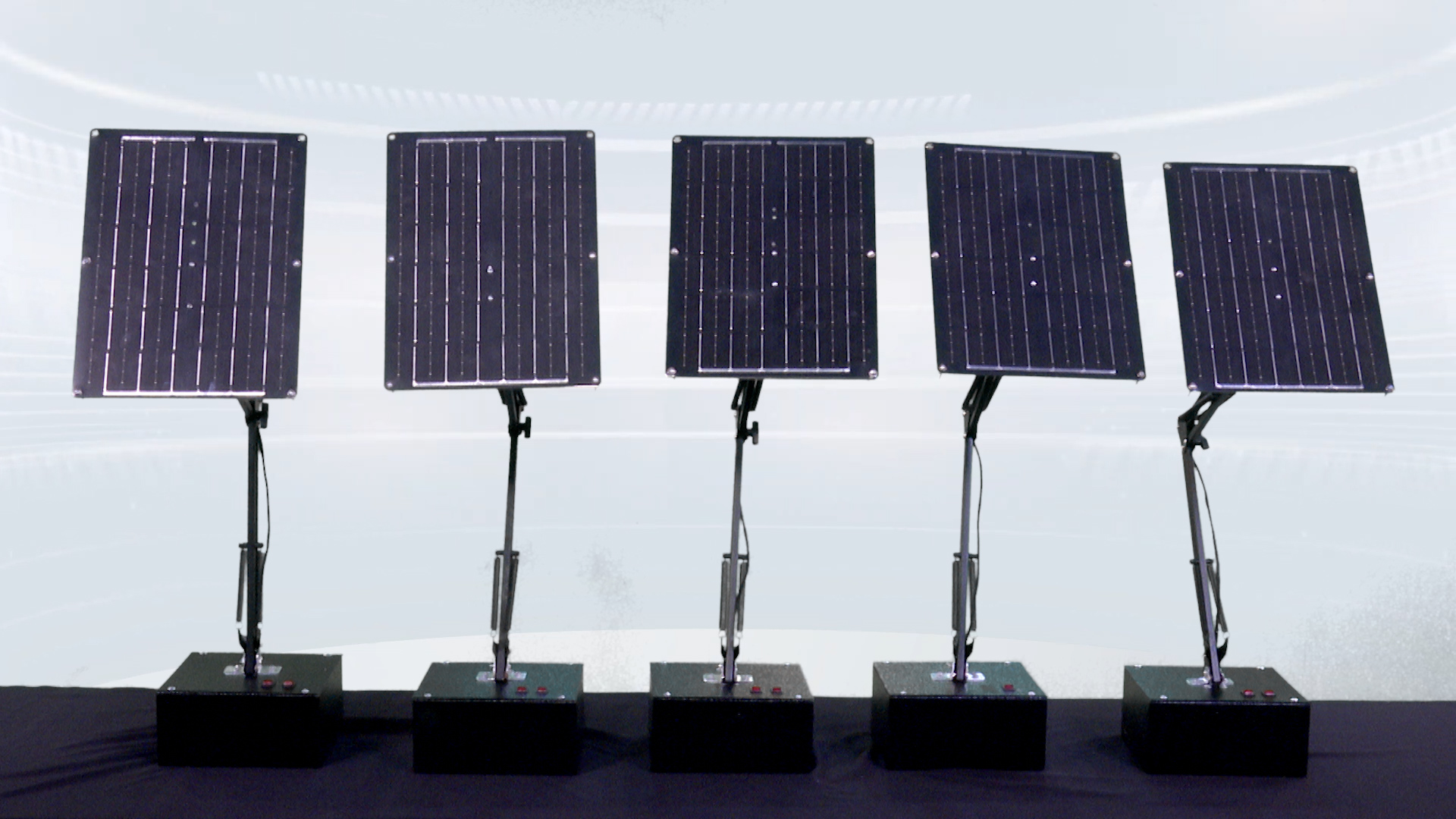
This is a short video overview of the new iterations.
FTC 2026 Competition Robot
This is a short video overview of the 2026 FTC competition robot.
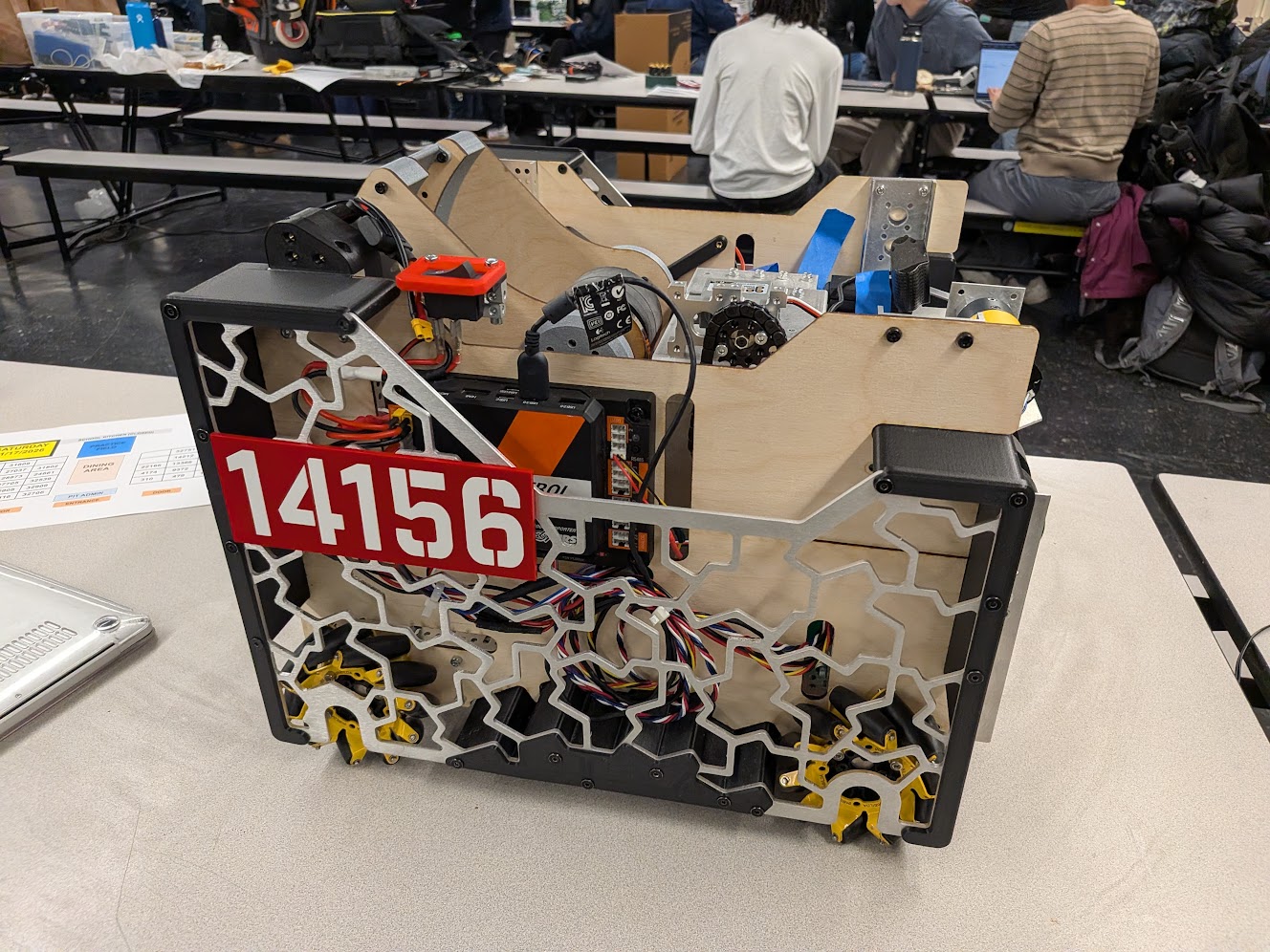
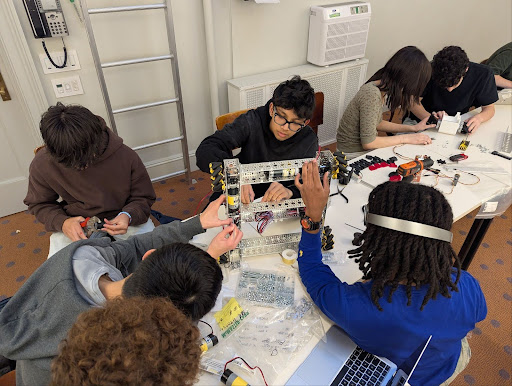
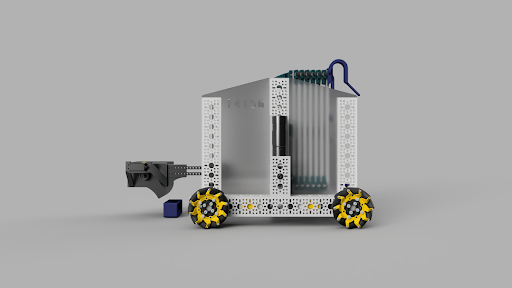
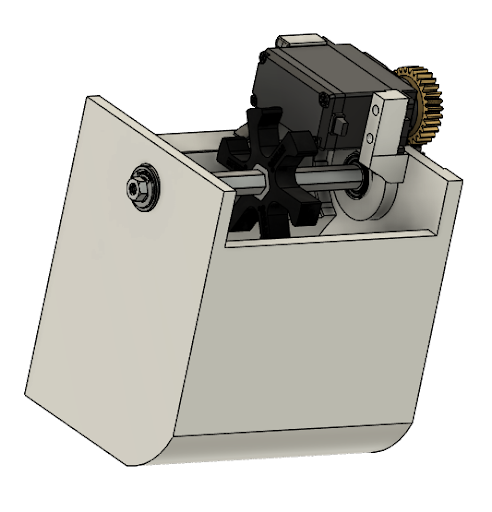
For the 2024–25 season, FTC's "Into The Deep" game challenged robots to collect and score small "pixels" into high baskets and ascend a central structure. As lead designer for Team 14156, I developed a mecanum-drive robot with a vertical roller intake, bucket outtake, and dual linear slides to reach the high basket and climb the structure.
Design Process
Chassis
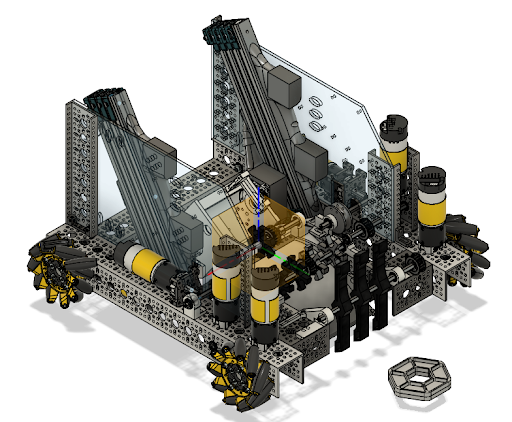
We chose a square goBILDA frame for packaging and serviceability, then modified members for slide clearance and an auxiliary motor mount for the collection linkage.
Square chassis + 4 mecanum wheels for strafing and precise alignment to the basket.
Linear Slides
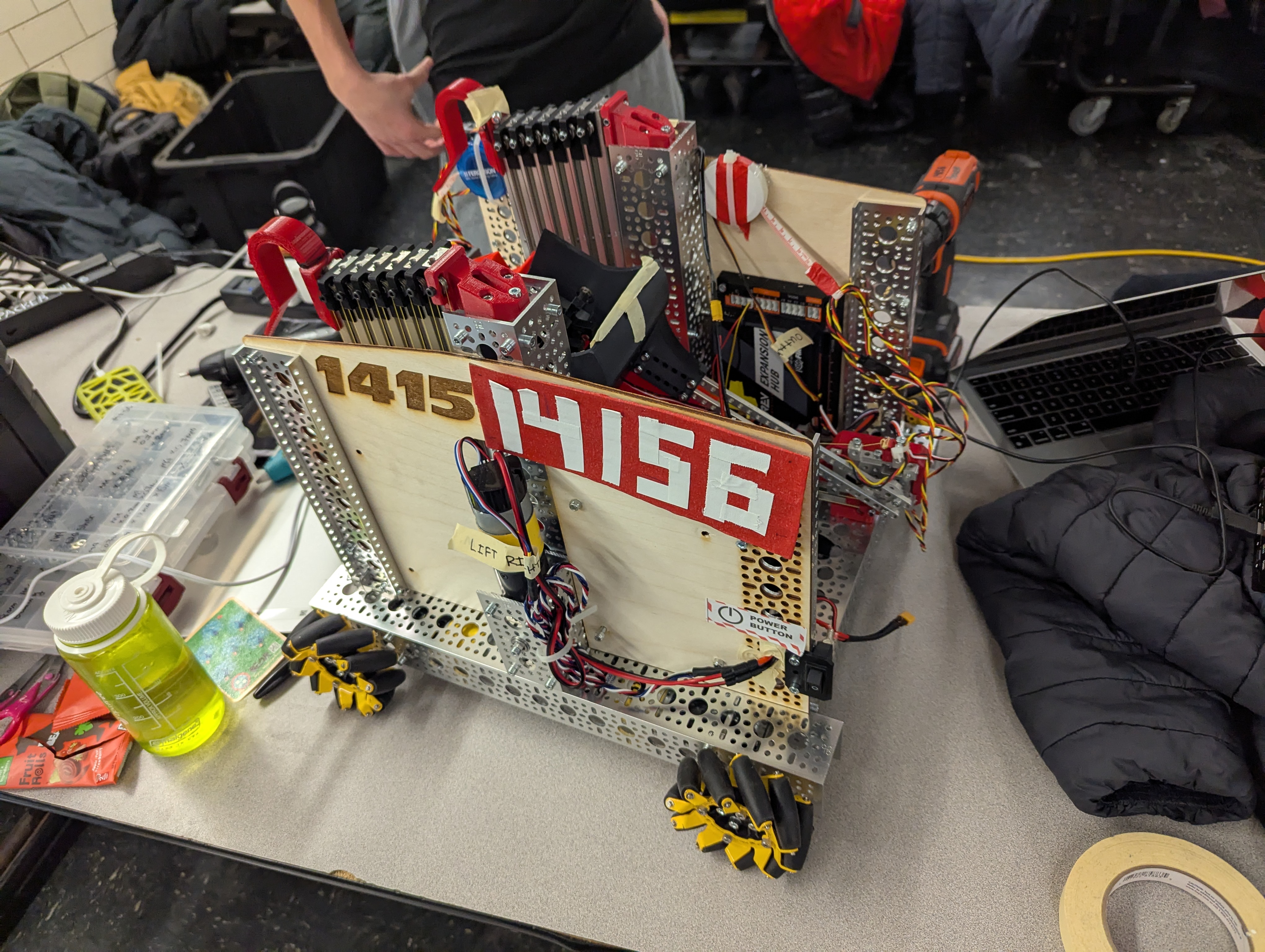
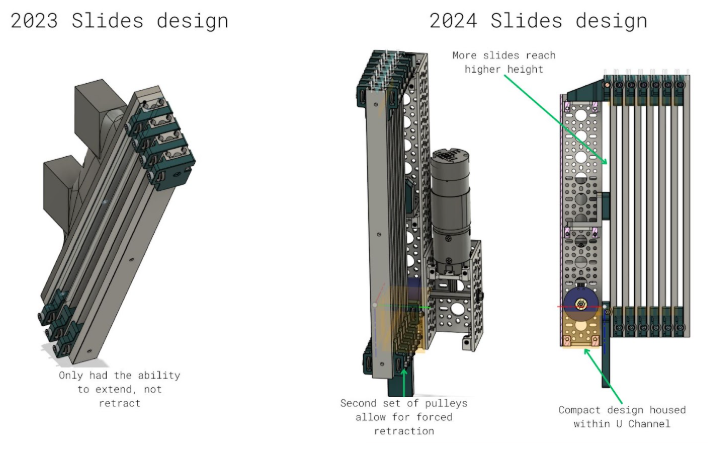
Two independent slide motors raise a cross-hopper. Early on, uneven rise skewed the hopper and changed the outtake angle. I planned encoder-sync and strengthened mounts where space allowed.
Dual slides with cross-hopper; alignment is critical for consistent dumps.
Spools
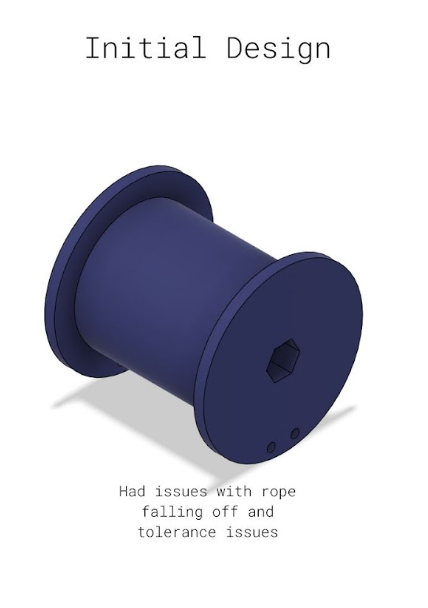
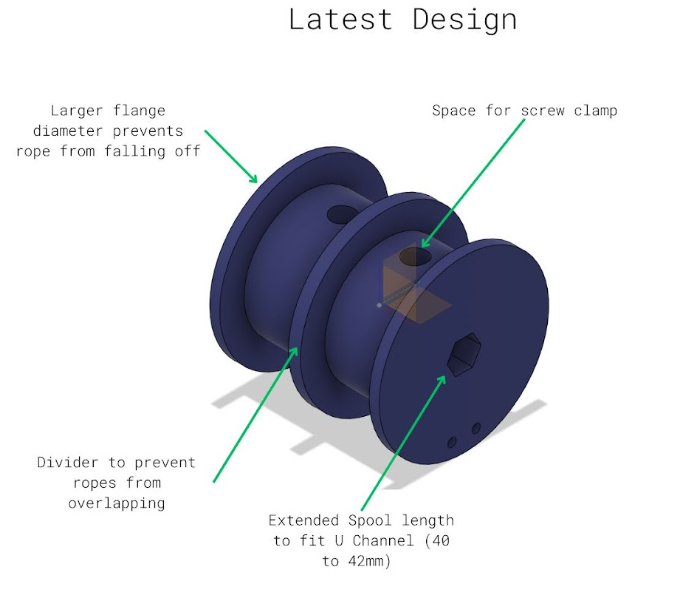
Initial issue: Narrow spools let the string wander and slip onto the axle. Update: Widened the spool and added a center rim to split up/down runs and prevent crossovers.
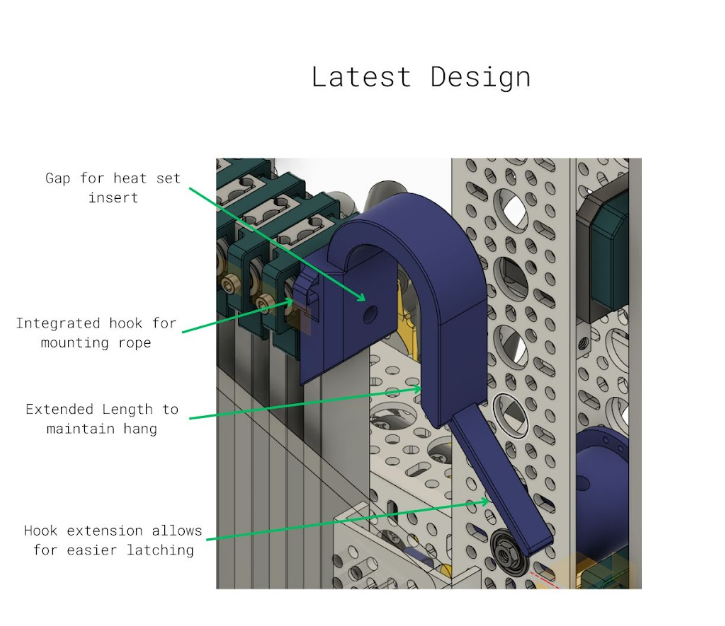
Hooks (ascent)
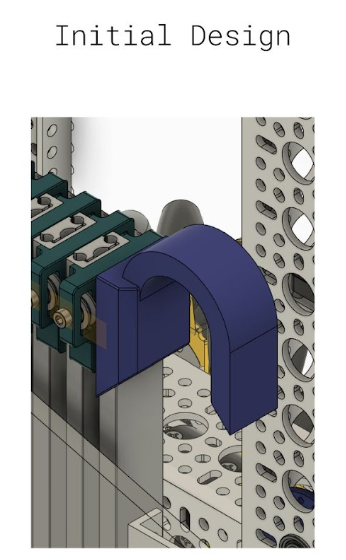
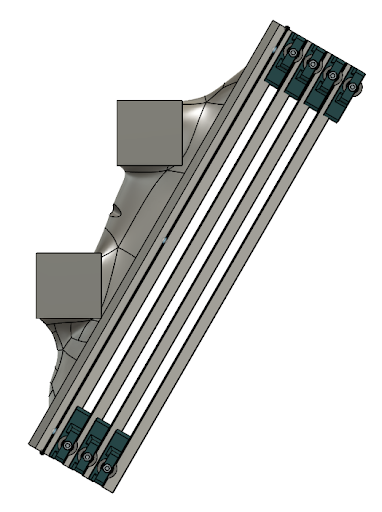
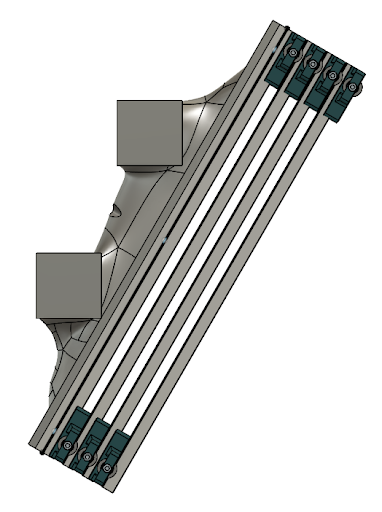
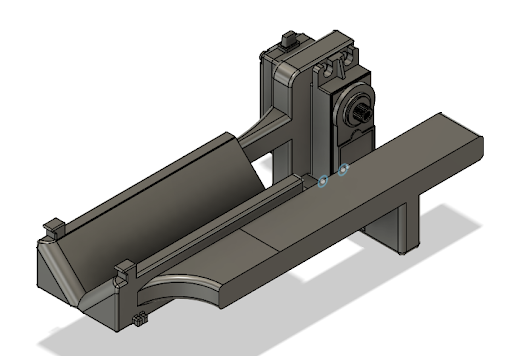
I slanted the hook geometry to increase tolerance during lining up to the rung. The profile reduces "perfect hit" requirements and speeds driver handoff into the climb.
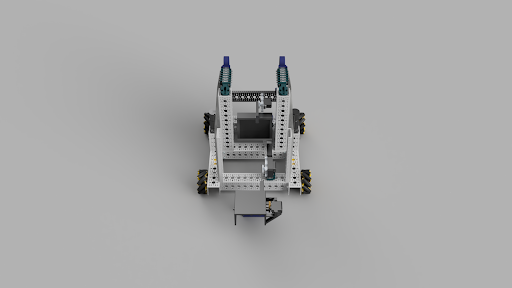
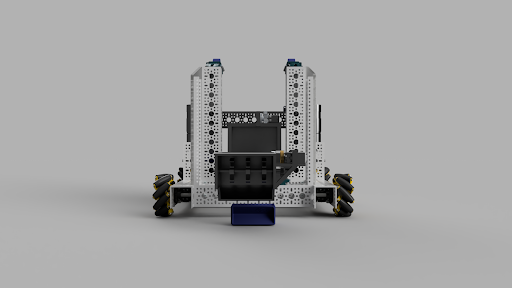
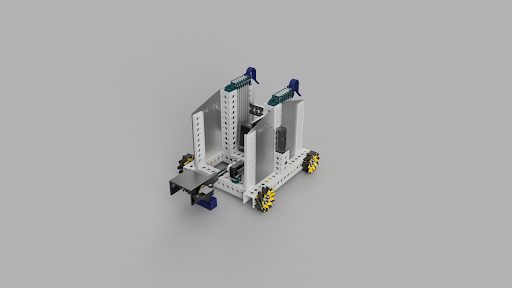
Final 3D Designs
What I learned
Syncing dual actuators (even just with sensors + guard rails) prevents cascading skew issues.
Designing for the game meta (high basket + high ascent) focuses effort where points matter.
FTC Team 14156 — Season Portfolio Highlights
Rectangular mecanum chassis + intake → outtake → linear slides
Why this project
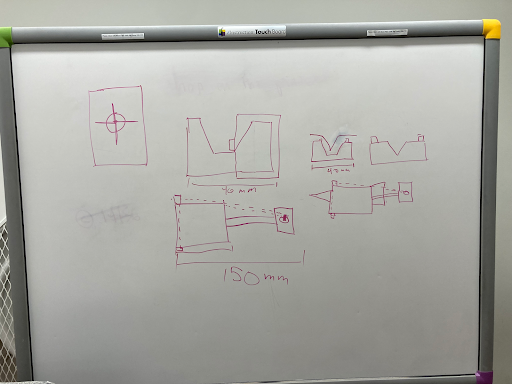
As Team 14156 scaled up from a finalist-alliance season to Super-Qualifiers, we rebuilt our process: plan earlier, CAD end-to-end, and design for repeatable scoring. The portfolio captures that shift: from whiteboard sketches to Fusion 360 assemblies, 3D-printed parts, and a drivetrain + manipulator package tuned for consistent cycles and endgame execution.
Intake
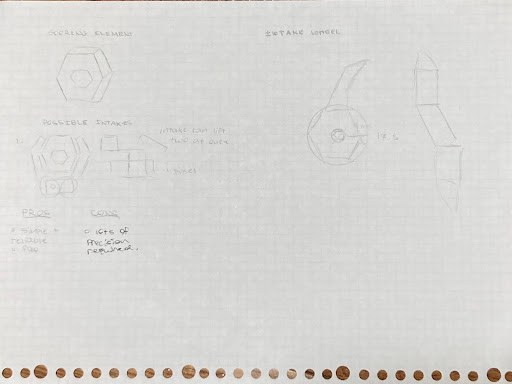
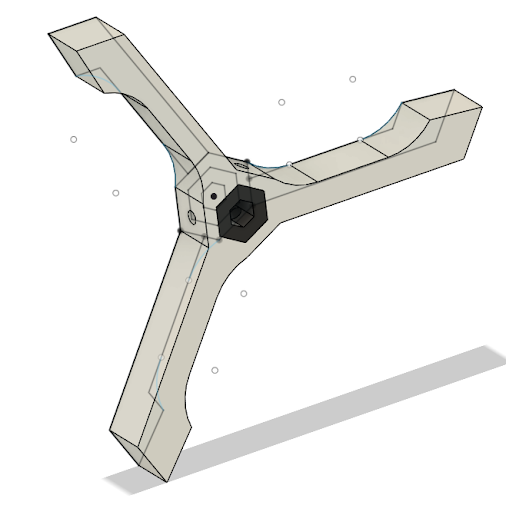
After evaluating a claw concept, the team adopted a vertical roller intake with custom flexible flaps—stiffer than surgical tubing for better force transfer. Iterated from two-end to three-end flap geometry.
Outtake
Simple, reliable bucket outtake with a small roller to transfer pixels from the ramp into the bucket—then a quick flip to score on the backdrop.
Bucket + helper roller for controlled handoff and clean dumps.
Linear Slides
Switched from prior REV slides to Misumi linear rails for speed and weight savings; upgraded to durable Kevlar string to prevent fray.
Side Plates
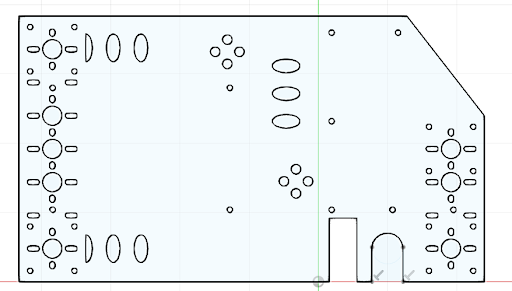
CNC-cut polycarbonate side plates provide rigid mounting for slides and electronics (REV Hubs).
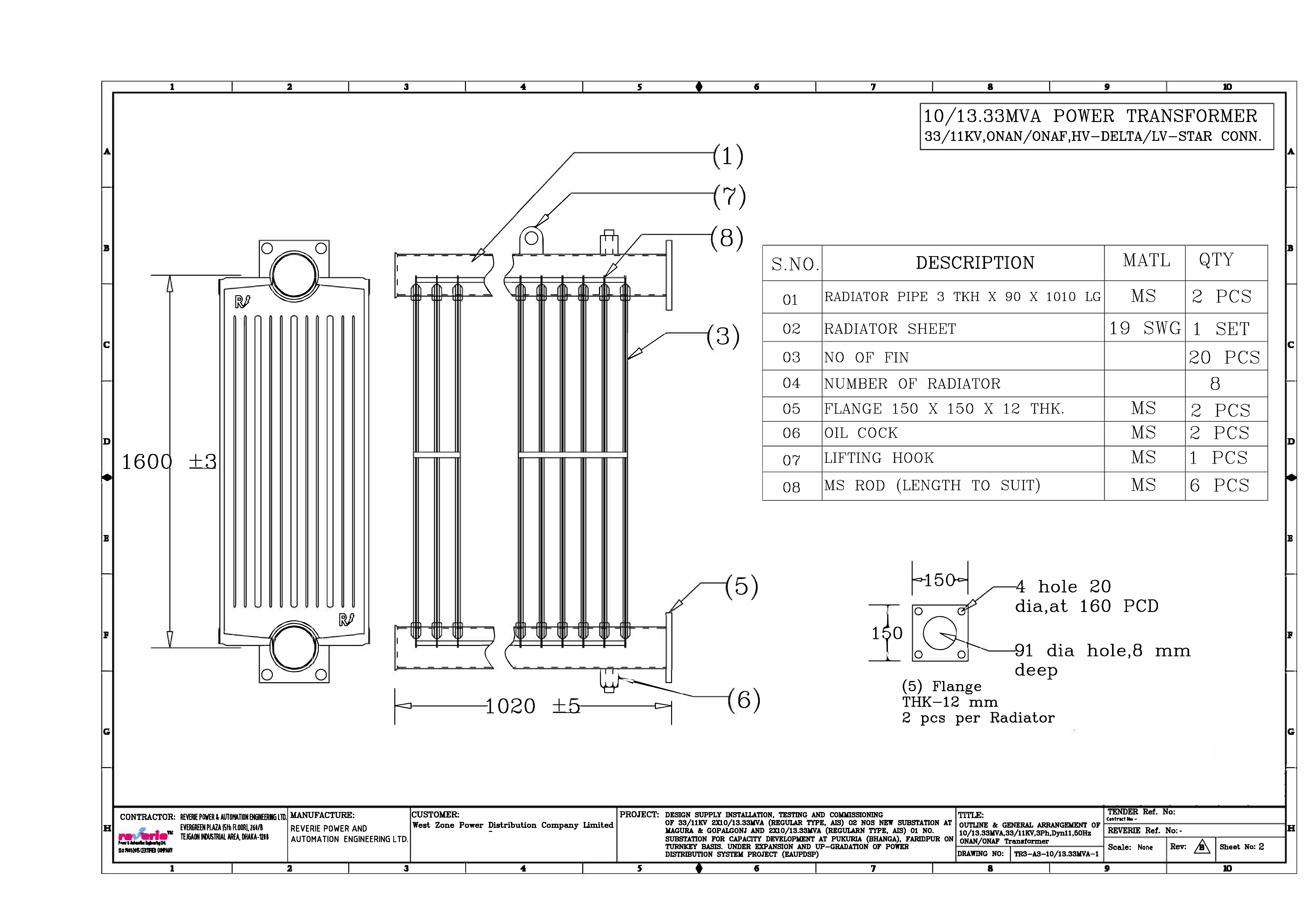
Radiator bank drawing — finned heat exchanger for ONAN cooling
Why this project
At Reverie Power & Automation Engineering Ltd., I produced a fabrication-ready radiator drawing for a power transformer. The goal: convert specs into a clean, buildable layout with correct fin count, flange geometry, and service features—so a shop can manufacture, assemble, and maintain the radiator bank with zero ambiguity.
Quick heat check
Heat per fin           = 275 W
Fins per radiator      = 20
Number of radiators    = 8
Total fins             = 20 × 8 = 160
Total dissipation      = 160 × 275 = 44,000 W
Back-of-envelope capacity check to sanity-check fin count vs. cooling requirement.
What I learned
Spec → shop floor: turn client notes into unambiguous dims, weld notes, and a BOM that fabricators trust.
Cooling logic: how fin area, oil path, and air side ΔT set the radiator's effective heat transfer.
Tolerancing & assembly: flange PCD/slots for alignment; lifting points placed for safe rigging.
Serviceability: valve/oil-cock & clearance placement so a single radiator can be isolated and swapped.
Transformer cooling — ONAN in one minute
Losses heat the oil. In ONAN (Oil-Natural/Air-Natural), hot oil rises through headers into finned radiators, sheds heat to ambient air by natural convection, then returns cooled. No pumps or fans — gravity and temperature differentials do all the work. The radiator fin count and geometry directly set how much heat the transformer can safely dissipate.